Name the diagnosis. Then explain the mechanism.
USMLE BANK is a Step 1 question bank built around the two steps the exam asks for. Every explanation opens with the same three lines — clues, diagnosis, mechanism — and then goes through every answer choice.
We are writing the questions now. Step 1 first, Step 2 CK next.
Three original questions. In the app the explanations are in Japanese, with the medical terms kept in English; they are translated here.
Written for the way Step 1 asks.
Original, exam-style questions
Clinical vignettes with one best answer. Labs come as tables, and where the exam would show a photo, a slide or a scan, so do we. Every question is written from scratch.
Clues → Diagnosis → Mechanism
The same three lines open every explanation, so you practise the reasoning the exam rewards, not just the letter that was right.
Every answer choice explained
Each wrong answer says when it would have been right, and every explanation ends with HIGH-YIELD lines in English, one fact per line, ready for review.
Explanations in the language you think in
Questions and answer choices stay in exam English. Explanations come in Japanese first, with disease, enzyme and drug names kept in English. More languages are planned.
One bank. Not a stack of tools.
Preparing for Step 1 usually means three or four things open at once, and part of every evening spent copying what you learned from one into another. Here it stays in one place.
- Instead ofA question bank
Original Step 1 questions
Each one explained from the clues to the diagnosis to the mechanism, then through every answer choice.
- Instead ofA flashcard app, and the evenings spent filling it
Flashcards that write themselves
Miss a question and the fact it was testing becomes a card. It comes back just before you would forget it, and stops once you know it. Any other HIGH-YIELD line is one tap.
- Instead ofA vocabulary notebook for medical English
Terms saved where you met them
Tap any term in an explanation to hear it and save it, with its meaning in Japanese.
- Instead ofA list of questions to redo
Review
What you missed, or were not sure of, waits there until you get it right.
One thing we leave to the people who write the exam: the official practice exams. Sit one before your test date to see where you stand. USMLE BANK is for the months of work before that.
Step 1 first. Step 2 CK next.
- NOW
Writing Step 1
The foundations — biochemistry, genetics, pathology, pharmacology, microbiology and immunology — are written. The organ systems are under way, starting with the heart.
- NEXT
Step 1 opens
The question bank goes live as a web app.
- LATER
Step 2 CK
Same format, same account.
Choose a period, pay once
Every plan opens the whole bank; only the length differs. Nothing renews, so there is nothing to cancel. These are the prices from launch.
3 months
$89.67 a month
If you're aiming to pass soon with this bank alone
Hear when it opens6 months
$53.17 a month
If you want to prepare at an easy pace while you work
Hear when it opens- Every Step 1 question and explanation, including the questions added after launch
- Every explanation opens with Clues → Diagnosis → Mechanism, then goes through every answer choice
- Real images wherever the exam shows a photo, a slide or a scan
- The point of every question you miss comes back as a flashcard — nothing to write yourself
- Terms saved to a vocabulary deck, and the questions you miss waiting in Review
- 20 questions free to try before you choose
- One payment — no automatic renewal
Paid once, by PayPal or card. Nothing is charged when the period ends. USMLE BANK is not open yet, so it cannot be bought today. Legal notice
After the USMLE, the OET.
For ECFMG Certification you need OET Medicine as well as Step 1 and Step 2 CK. The OET is the English test built for healthcare. On OET BANK, our sister site, you can try free questions — no sign-up needed.
You already know the medicine. Step 1 asks it in its own way.
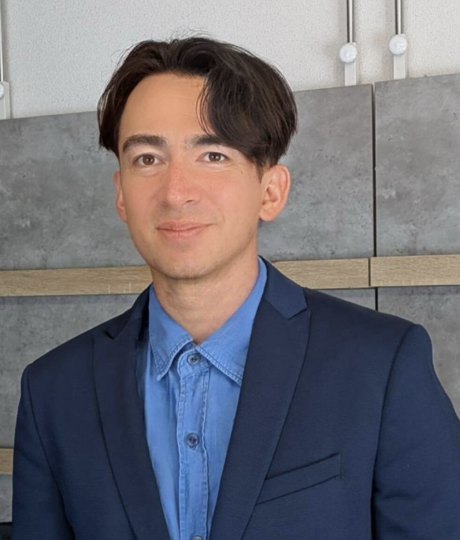
Through SOLO, I help doctors and nurses build careers abroad. For most of them, the first wall is English.
Step 1 is taken by people who have already studied medicine. Reading fast in English matters, but what separates scores is the shape of the question: name the disease from the case, then explain why it happens — often in a setting that assumes American epidemiology and American practice.
So every USMLE BANK explanation opens with the same three lines — clues, diagnosis, mechanism — and then goes through every answer choice. Where an instinct from training in Japan would point the wrong way, a US vs JP note says so.
— Luke, head of SOLO